

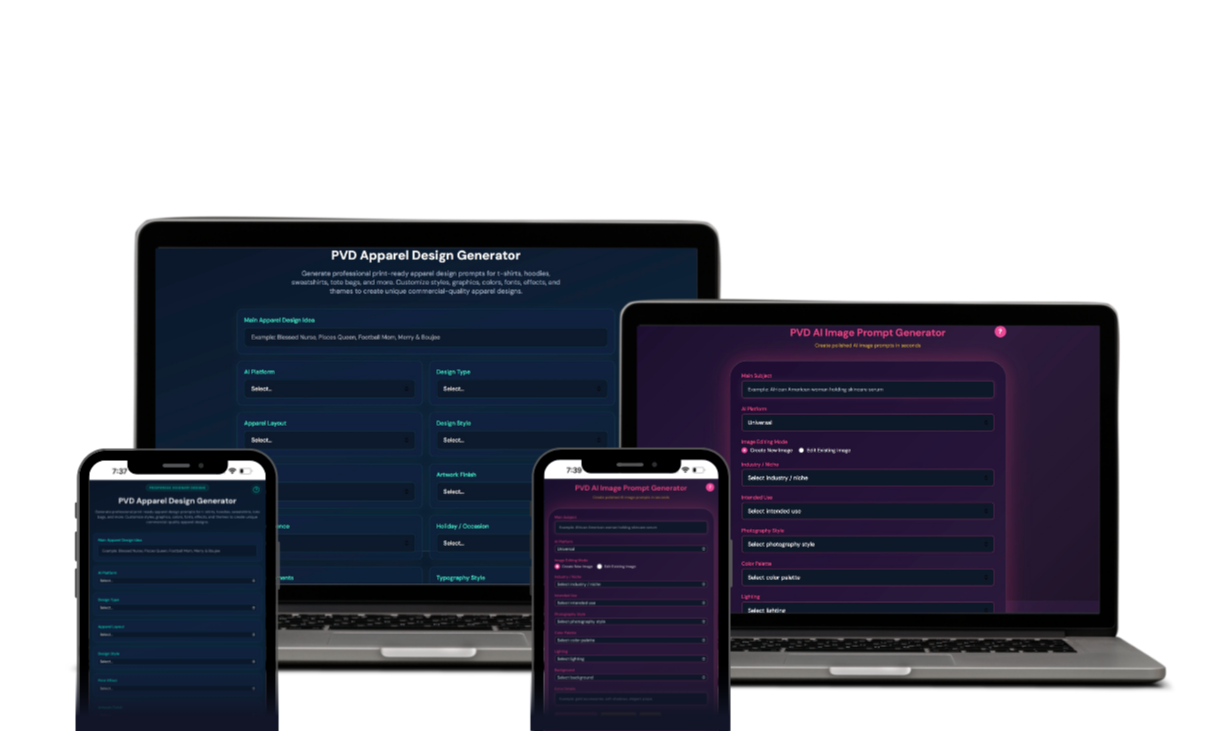
Generative AI UX System & Interaction Design
PROMPT ENGINE
UI SYSTEM FRAMEWORK
Role: AI Interaction & Product Systems Designer
Timeline: 3 Weeks (Product Development)
Tools Used: Figma Advanced Components, Interaction Mapping, AI Prompt Engineering
Engineered an intuitive, option-driven prompt generation system designed to eliminate user cognitive load, streamline complex AI image generation workflows, and manage interactive prompt text token states.
Designed and engineered a cohesive, variable-based AI prompt building framework from scratch. By replacing open-ended text inputs with a structured visual selection matrix, I successfully minimized user prompt fatigue, stabilized output predictability across stock photography and apparel models, and built a lightweight, five-slot auto-wiping historical session state tracker.
01 CONTEXT & COGNITIVE FRICTION ━━━━
The Prompt Anxiety Problem
The explosive growth of generative AI platforms has introduced a critical interface hurdle: the open-ended, blank text command box. This design creates immense prompt anxiety and cognitive overload for average users, who struggle to guess the exact technical tokens, framing constraints, and styling syntax required to generate a high-quality asset. Without a structured workflow, users end up in frustrating, repetitive trial-and-error loops that waste server bandwidth and degrade platform trust.
Dynamic Input State Boundaries
To solve this friction, I had to architect a system that replaces guesswork with an intuitive, option-driven selection matrix. The core structural challenge was managing data variables across widely different user categories such as tracking camera settings for stock photos versus tailoring fabric weaves and printing placements for apparel lines. Every option block had to actively feed text tokens into a central, interactive code block that users can seamlessly copy or manually edit in real time without system lag.
02 THE VARIABLE SELECTION ARCHITECTURE ━━━━
Systemic Variable Mapping
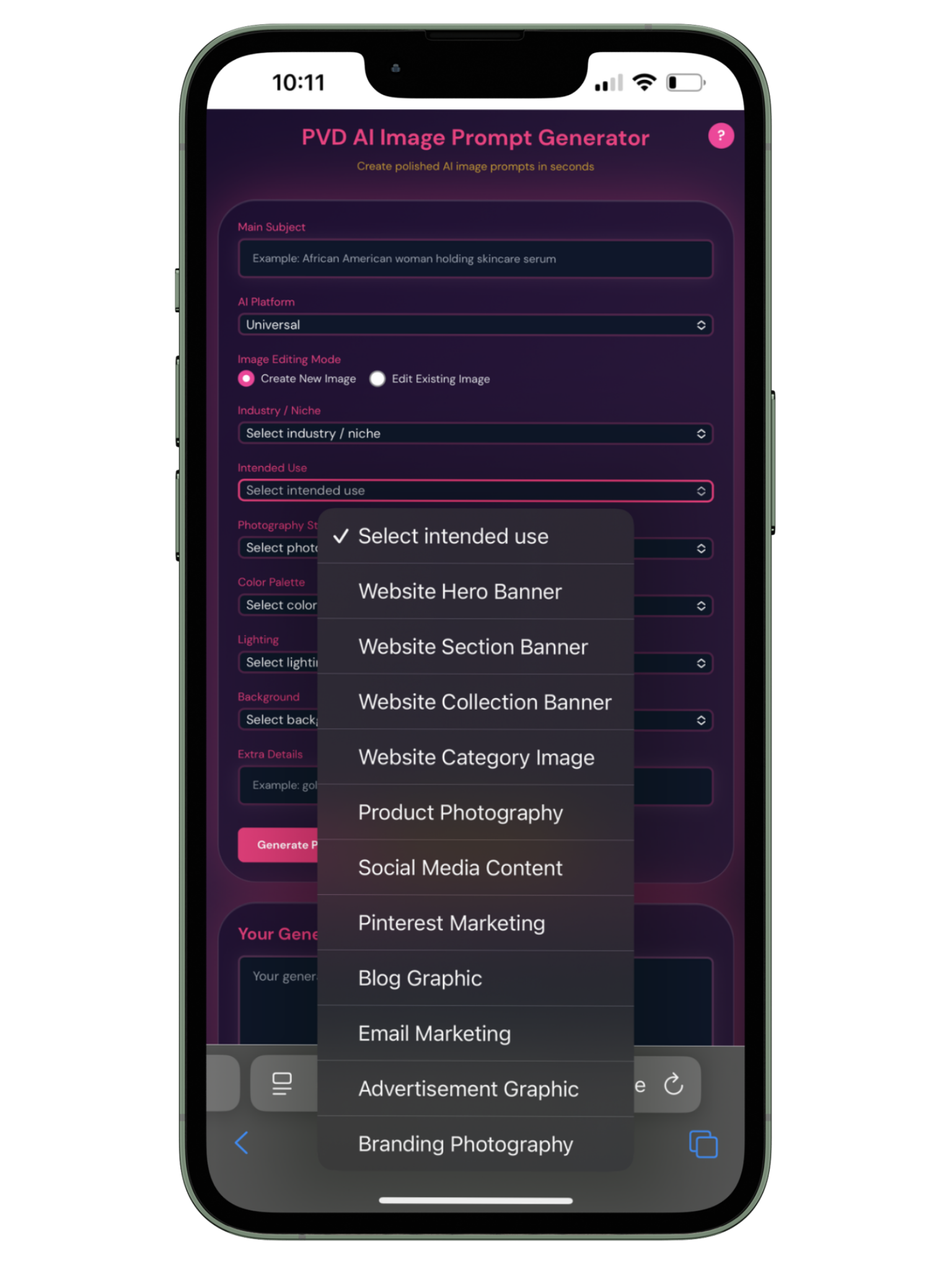
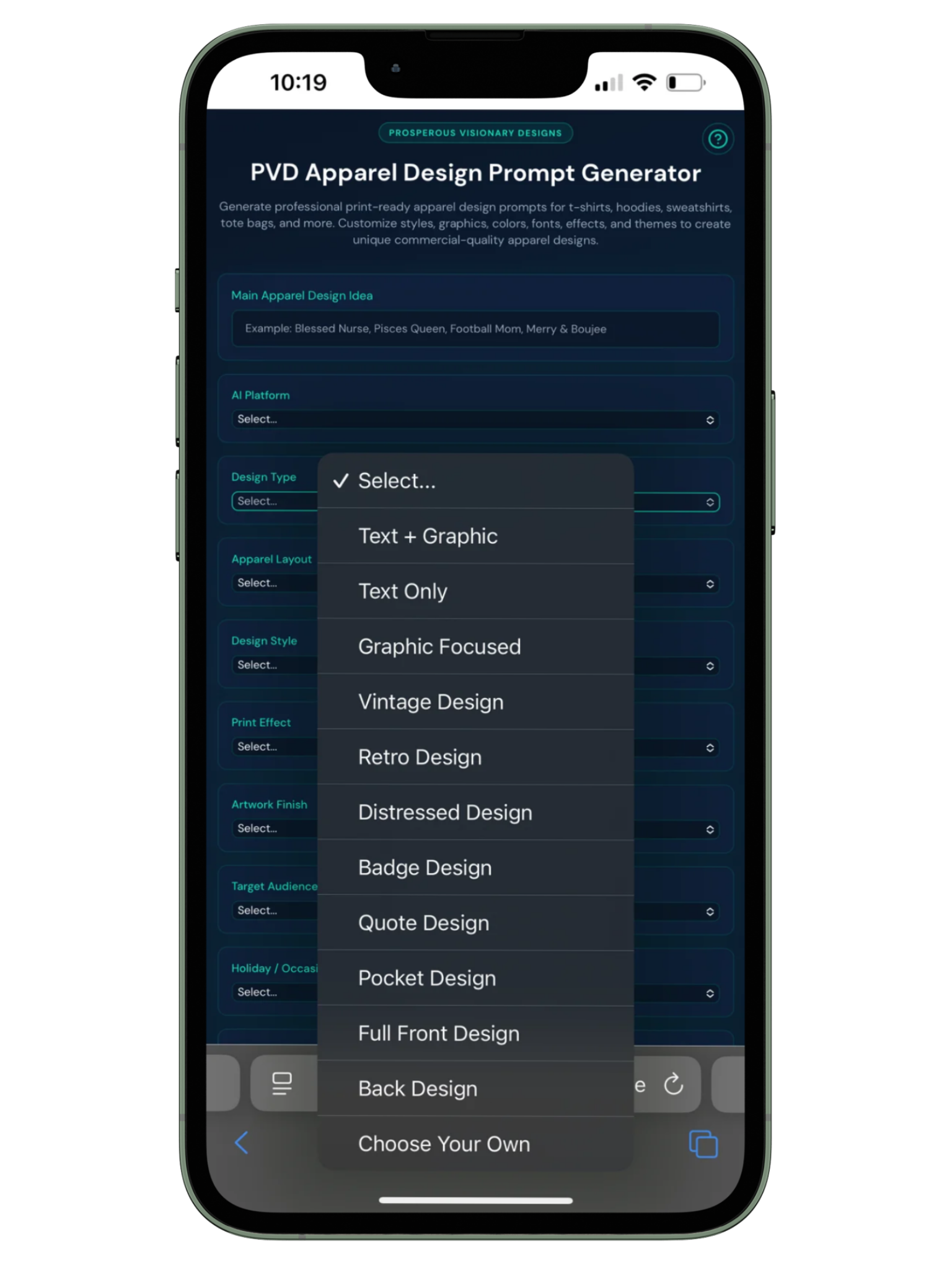
To handle separate generation categories seamlessly, I engineered a highly standardized layout component framework. By organizing specialized tokens into visual sub-menus, I mapped unique selection matrices for both media banners and apparel production lines. Users can instinctively build highly specific prompt strings by selecting targeted nodes for camera apertures, lighting angles, fabric types, or design styles completely eliminating open-ended prompt guesswork.
Session Memory & Edit Logic
Managing temporary data states required creating intuitive copy-to-clipboard actions directly linked to the active output string container. To ensure the interface remained a fluid design assistant rather than a rigid form, I formulated a native editing layer that lets users manually polish output script tokens directly inside the container block without losing their historical path. I also integrated an automated five-slot historical session tracker to protect active iterations during multi-prompt workflows.
03 SYSTEM DESIGN VARIATION ━━━━
Global Style Tokens & Component Variables
Engineered a lightweight, centralized visual system using strict theme setting variables. This cohesive framework establishes clear layout rules for choices, unified web typography scales, and modular button variables ensuring perfect visual continuity and lightning-fast speeds across the entire generator ecosystem.
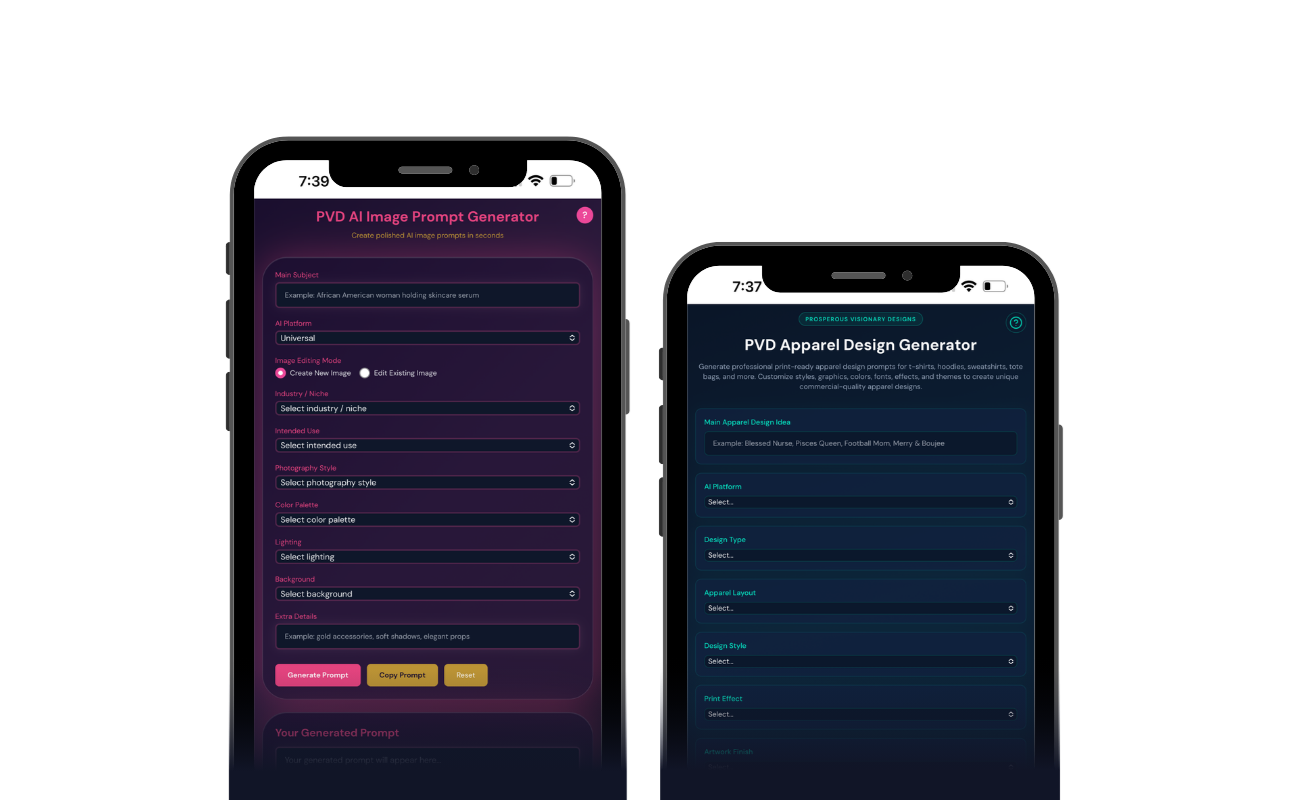
PVD APPAREL DESIGN GENERATOR
Clothing & Production Variables


PVD AI IMAGE PROMPT ENGINE
Media & Banner System Variables


04 PRODUCT IMPACT & OPTIMIZATION METRICS ━━━━
ZERO
Replaced the open-ended text box obstacle with a strict visual variable selection matrix, systematically reducing user cognitive strain and prompt anxiety.
Prompt Guesswork Elimination
100%
Fixed technical styling and framing tokens into standard backend choices eliminating repetitive, wasteful trial and error generation loops for users.
Output Predictability
5-SLOT
Built an automated, multi-slot historical data tracking container that safely holds active user iterations before executing a session auto-wipe.
Session State Security
05 FINAL PRODUCT DELIVERY GALLERY ━━━━
AI IMAGE PROMPT GENERATOR FOLLOW-THROUGH
02 Real-Time Prompt Compilation
01 Visual Variable Configuration
03 Platform Input Execution
04 Optimized Media Output Asset
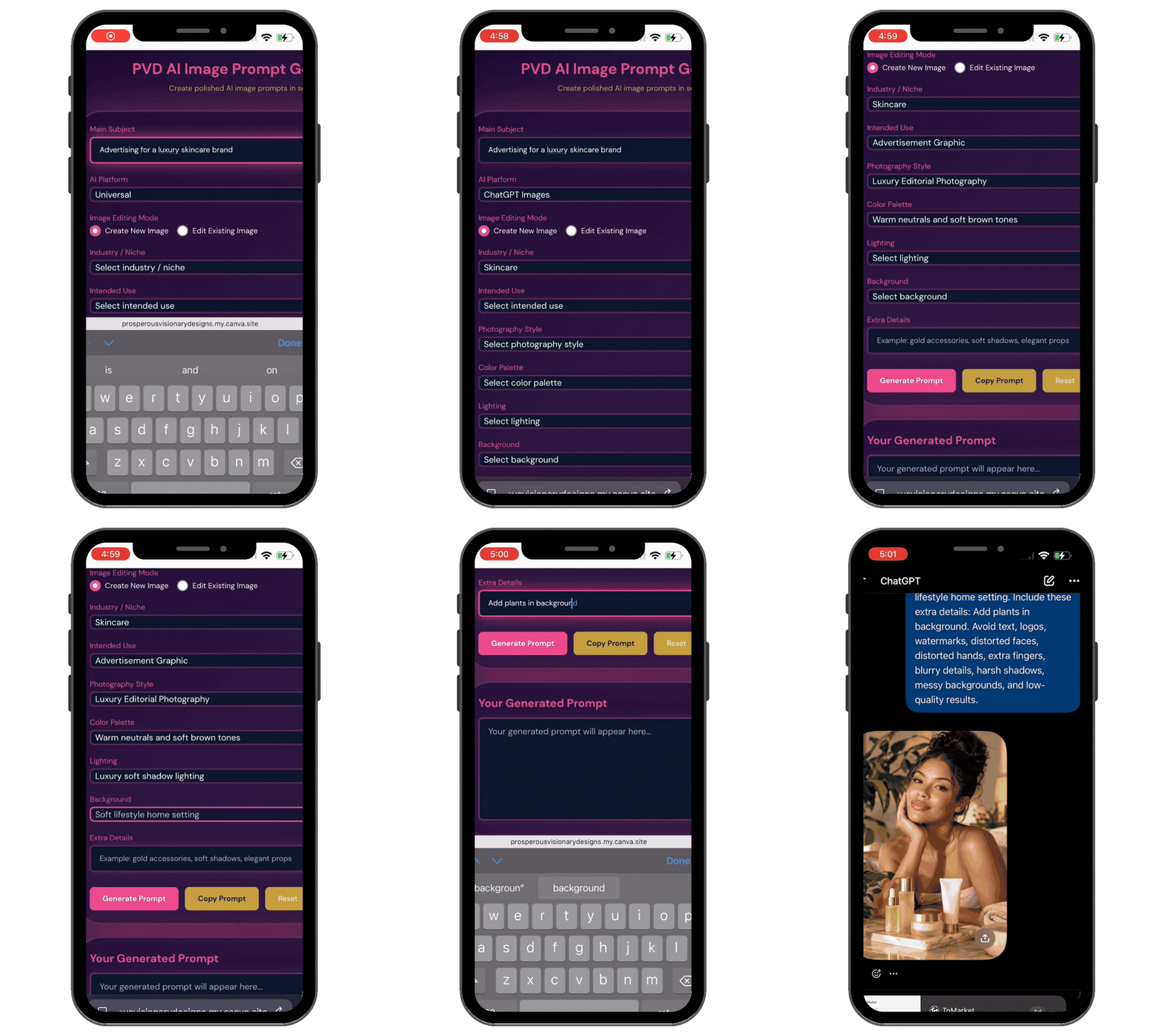

Visual Variable Selection
Optimized Image Output Asset
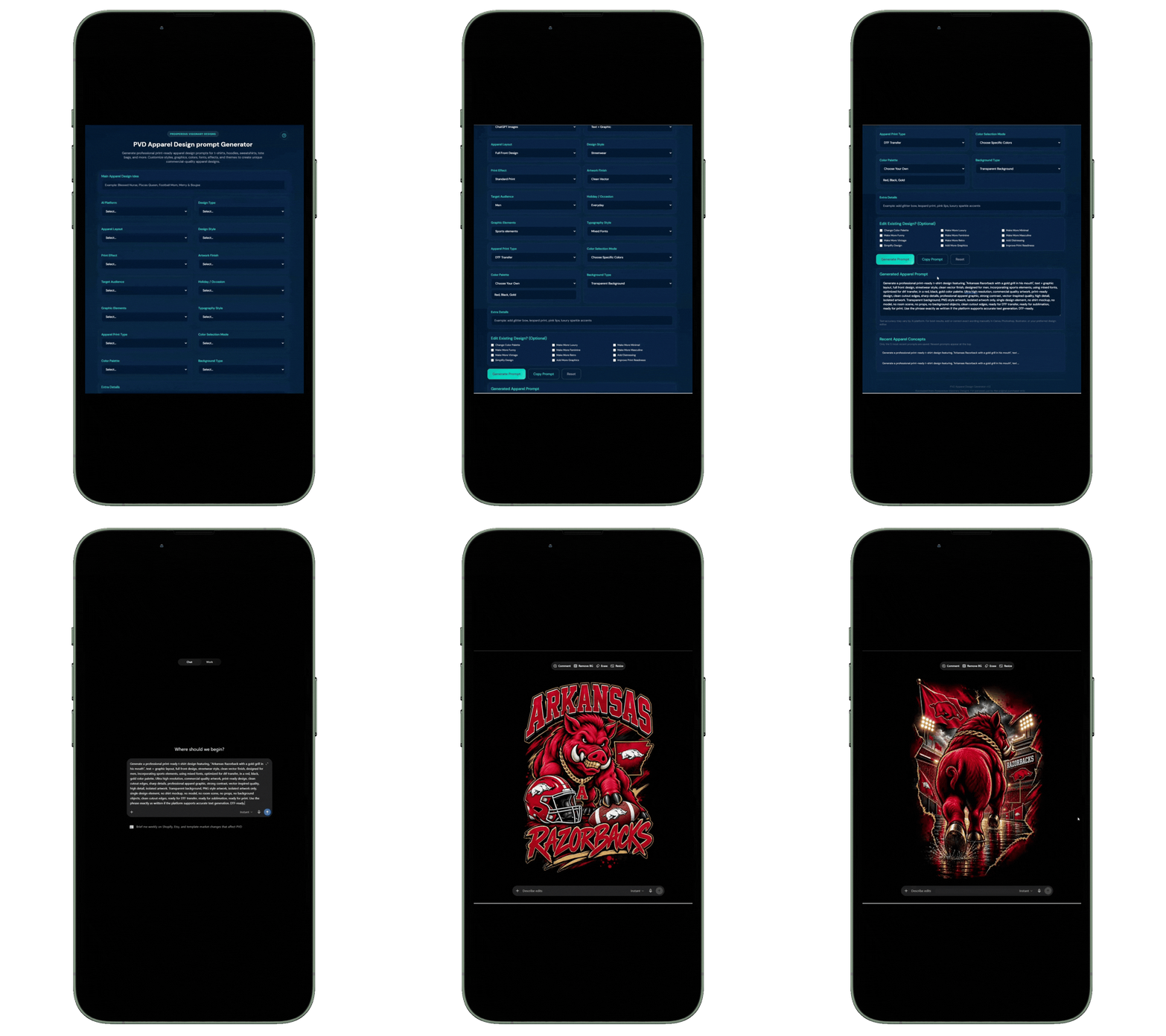
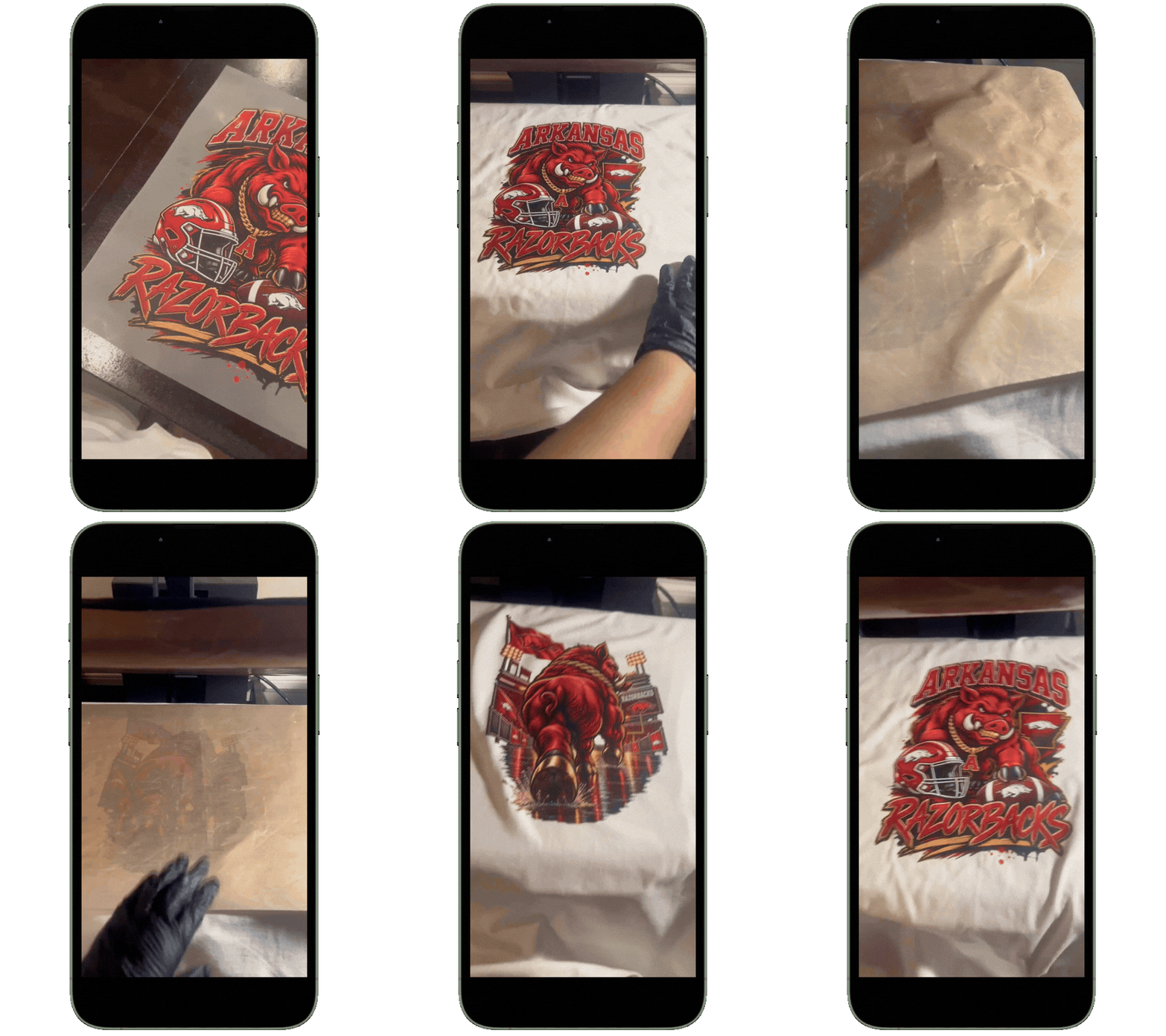
APPAREL DESIGN GENERATOR FOLLOW-THROUGH
03 Production Variable Generation
01 Apparel Parameter Mapping
02 Prompt Generation & Script Edit
04 Print-Ready Clothing Production
Print-Ready Clothing Production
Apparel Parameter Mapping
06 THE INTERACTIVE DELIVERY ━━━━
Project Reflection & System Utility
Architecting the PVD Prompt Engine UI system successfully demonstrated that complex generative data structures can be seamlessly translated into intuitive, user-friendly visual interfaces. By replacing open-ended command boxes with structured visual variable matrices, this framework eliminates cognitive overload while maximizing predictable creative output. The final system establishes an automation blueprint ready to drive scalable digital assets and sustainable commercial monetization channels with zero operational friction.
Dual-System Engine Deployment
INTERACTIVE UI SYSTEM